
If you’re focused on industrial microwave drying applications, you probably have one primary goal in mind: evaporating water. Microwave drying can be helpful in both food and nonfood applications. MW energy is used for preparation and treatment of both solids and liquids. The materials and applications in which microwave drying proves beneficial include: building materials (LVL lumber), textiles, foam, plastics, bio-solids, coal treatment, oil reclamation and more. Microwave drying is quicker and frequently more energy efficient than traditional methods, such as drying rooms or convection ovens.
We’re always open to discussing new markets and potential applications for industrial drying. We offer in-house product testing and welcome all prospective clients to bring their product along with them. We are also happy to receive your product here and test it for you, then report the results back to you.
Applications for Microwave Drying
Lumber Preparation and Treatment
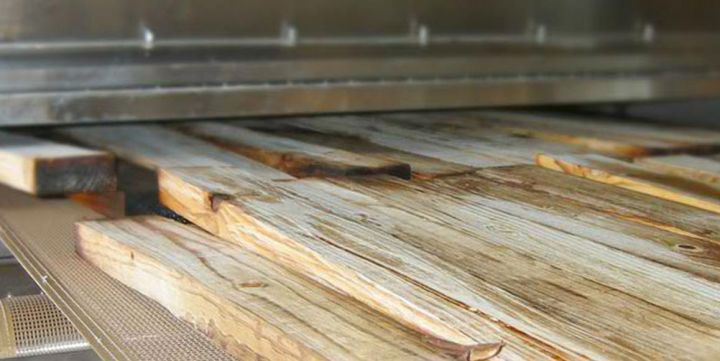
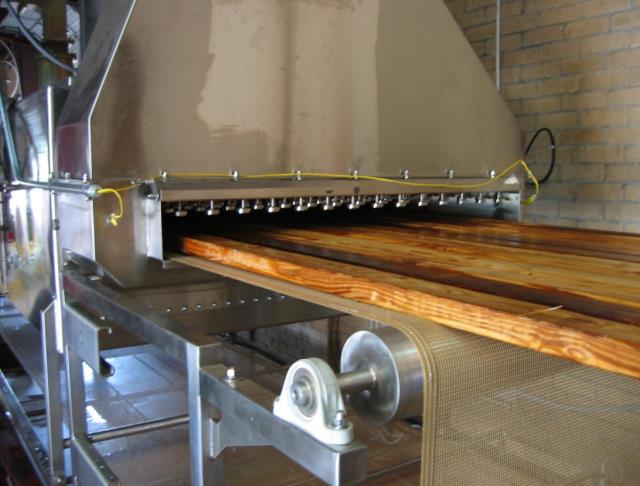
Lumber is an excellent candidate for microwave drying. LVL lumber typically involves spray-on adhesives, which are then later activated. Liquid adhesives activate effectively when subjected to microwave power. The preparation of lumber usually involves bonding layers of wood together and activating the adhesive with heat. For specialized systems for your specific building products, please contact us for details.
Foam Treatment
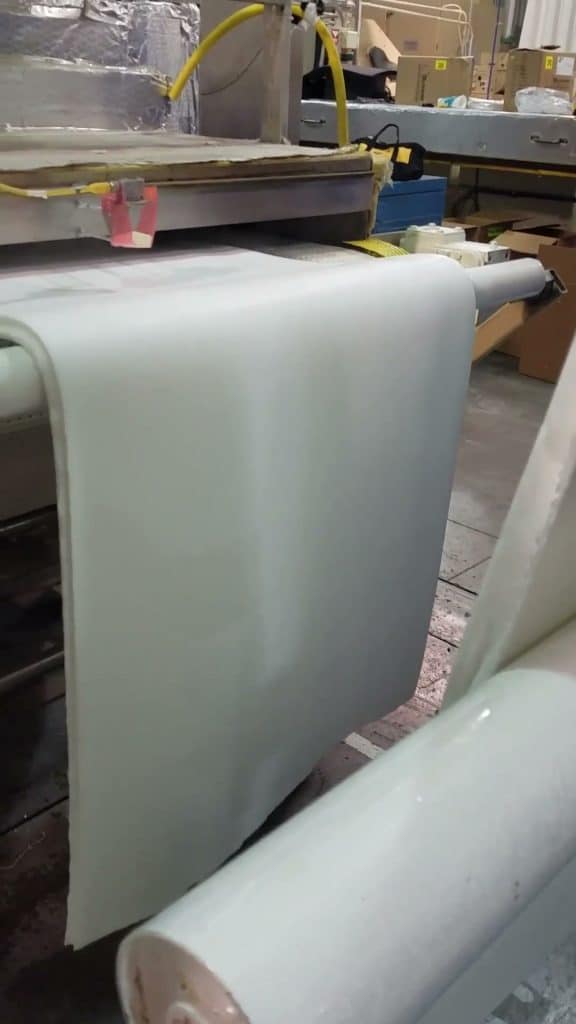
The manufacturing process of foam makes it a natural candidate for microwave treatment. When foam is made, the process often involves extensive drying. The consistency and transparency of foam makes drying with microwaves incredibly efficient.
Textile Preparation and Treatment
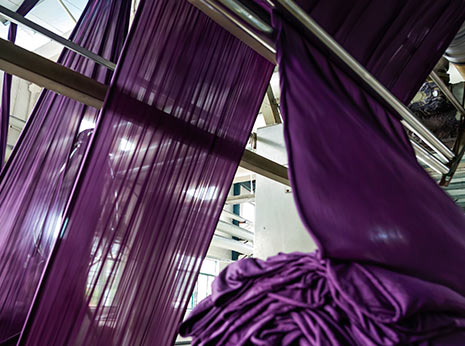
In textile manufacturing, two factors (among many) are of the utmost importance: color drying and adhesive setting. Both fabric and cloth materials benefit from application of microwave energy. MW power exhibits excellent color drying and adhesive setting properties. If you are looking for a finished product with retained color and resilient adhesives, run your textiles through our MIP 9 or MIP 10.
Drying with Industrial MW Ovens
Clients interested in turn-key industrial microwave systems understandably don’t know precisely how much energy they will need for their particular application. Whether it is cooking bacon, tempering frozen food products, or drying out building materials – energy requirements vary widely depending on the specific material and application. In this post, we focus on one common application; evaporating water.
For those of you who may be considering microwave drying in your business, we’ve put together a summary of the general process and calculations involved in determining the amount of energy required to dry your material. Use this information to help evaluate the long term operating costs associated with drying using microwave energy. Microwave drying is quicker and frequently more energy efficient than traditional methods like drying rooms and convection ovens.
Step One: Determine How Much Water You Need To Evaporate
With any given material, you will first need to measure how much water it contains before drying and determine a target for how much you want it to contain after being processed. For example, if you have 200 kilograms of material at 60% water saturation that you need to bring to 10% saturation then the calculation is simply 200(.6) – 200(.1) = 200(.5) = 100 kilograms of water. Generally speaking, you will likely have some target time in mind as well for how long you are willing to subject the material to microwaves in order to achieve that goal. So, let’s say you are trying to evaporate 100 kg of water in two hours. Let’s assume the starting temperature of the material is 20°C.
Step Two: Understand How Your Material Will React To Microwaves
For most materials, water will easily be the most microwave sensitive molecule and will therefore minimize the amount of energy lost through absorption to the rest of the material you are trying to dry. The calculations to follow are specific to the amount of energy required to evaporate the water alone and so should serve as a rough estimate of the total energy you will need since some small part will be lost to the rest of the material. However, this loss should be small (less than 5% in most cases). If you have a material with a high dielectric loss tangent though, this will be larger. Also, if you have a material that is highly receptive to microwaves then you may want to consider drying over a longer time period to avoid unwanted heating of the base material.
Step Three: Apply This Formula To Understand Energy Needs
The formula for calculating the amount of energy required to evaporate water is based on the specific heat capacity of water; 4.184 kilojoules (kJ) of energy is required to heat one kilogram of water by one degree Celsius. Once this energy heats water to its boiling point (100°C), roughly another 2600 kJ are then required to phase shift one kilogram of liquid water to steam. So, the calculations for the amount of energy required in our earlier example (100 kg of water in two hour) would be as follows:
Energy required to heat water to boiling + energy required to phase shift the water = Total
(4.184 * weight of water in kg * change in temperature in Celsius) + (2600 * weight of water in kg) = Total
(4.184 * 100 * (100-20)) + (2600 * 100) = 293,472 kJ
Since this amount of energy needs to be applied over the course of two hours (7,200 seconds), then 293472/7200 = 40.76 kJ/sec = 40.76 kilowatts.
Our total energy requirement is therefore 293,472 kJ which equates to a continuous application of 40.76 kW over two hours.
Step Four: Use This Information To Make An Informed Decision
Knowing your energy requirements up-front will save you time when considering purchasing a microwave oven. When talking with high-power microwave manufacturers, this will be the first data point necessary to establish before more productive conversation can be had about pricing a specific oven or system. For instance, in the example above, the amount of energy required could be supplied by one standard 75 kW generator.
However, if the drying had to be done in 20 minutes instead of two hours then three generators would be required to produce the 244.56 kW required.
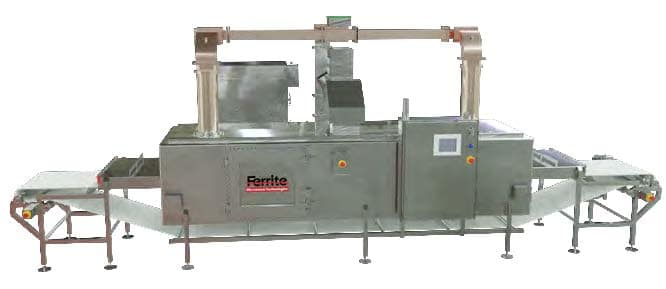
Energy requirements are also crucial when building a business case for making an investment in new drying systems for your facility. Justifications of this kind are crucial when considering large capital purchases like commercial microwave dryers (like the one seen below).
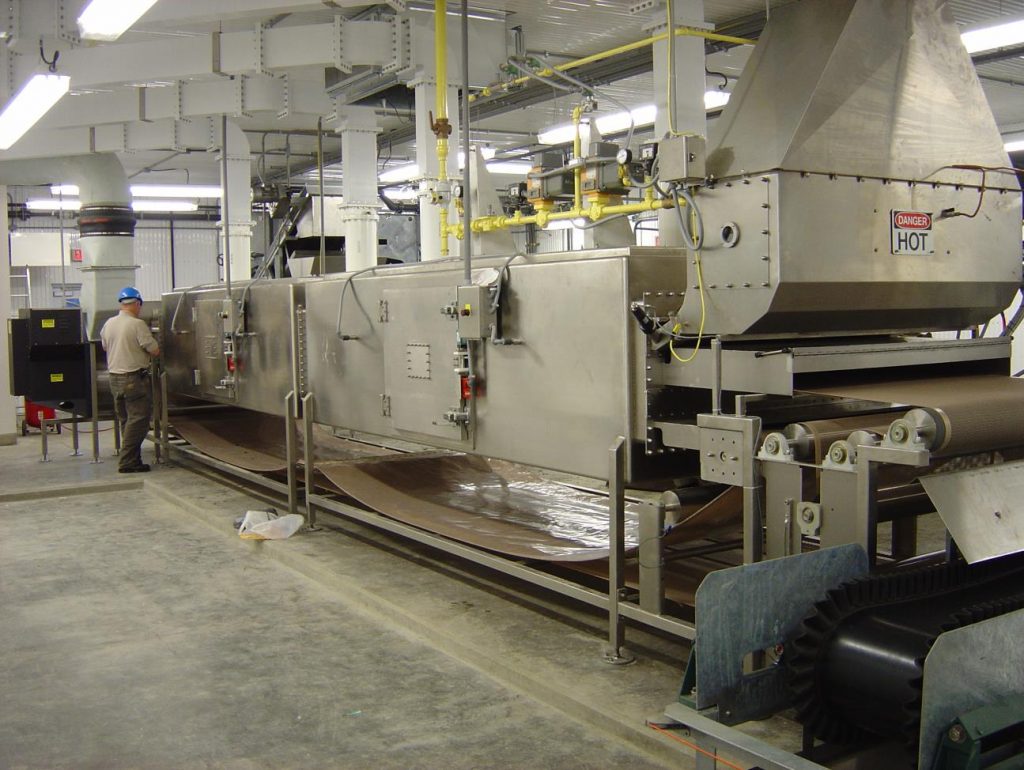
To learn more about our microwave drying and our systems, please contact our sales team. We’re always open to discussing new applications and the ways in which microwave energy can work for you.